A Completed Transformation
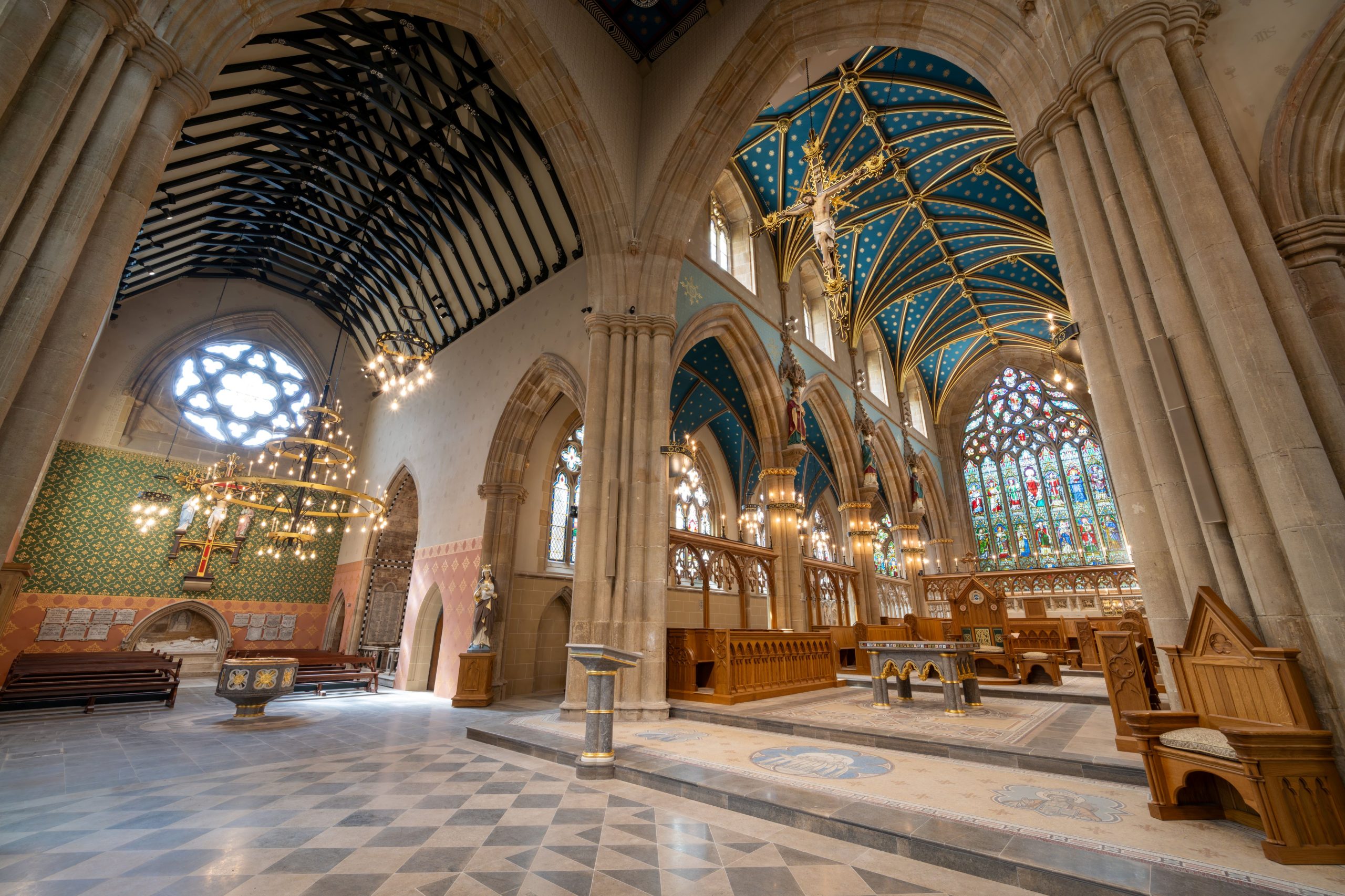
After more than 175 years at the heart of diocesan life, Salford Cathedral has now been fully restored. Over the last 3 years there has been a once-in-a-generation transformation, renewing the Cathedral’s fabric, restoring its sacred character, and securing its future for generations to come.
The Cathedral stands reopened, revived, and ready to serve as a vibrant centre for worship, community, and encounter in the heart of the city.
The Project
The restoration has addressed significant structural challenges while carefully enhancing the Cathedral’s liturgical and spiritual environment.
During early works, it became clear that the stonework, roof, and spire required far more extensive repairs than originally anticipated. This extended both the timeline and scope of the project, ultimately resulting in a comprehensive three-year programme of restoration.
Throughout this period, the Cathedral community continued to worship on site in the temporary church, maintaining the Cathedral’s role as a living place of faith.
What the Project Has Achieved
The restoration has delivered three core outcomes:
Repair
The Cathedral’s structure has been stabilised and secured, ensuring it is safe, watertight, and protected for the future.
Conserve
Historic features and original design elements have been carefully restored, respecting the Cathedral’s Gothic Revival heritage and bringing back elements that had been lost over time.
Sustain
Major improvements have been made to sustainability, helping reduce energy use and future-proof the building.
The Work Undertaken
This project combined large-scale structural repairs with careful heritage conservation and sensitive liturgical renewal.
Major Structural Repairs
Extensive work was undertaken to stabilise and protect the building:
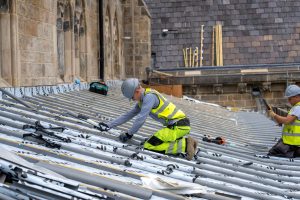
• Complete roof repair, including new coverings, flashings, ridge tiles, and drainage systems
• Installation of full roof insulation to improve thermal performance
• Repair of failing masonry across the building, including detailed stonework such as gargoyles and decorative features
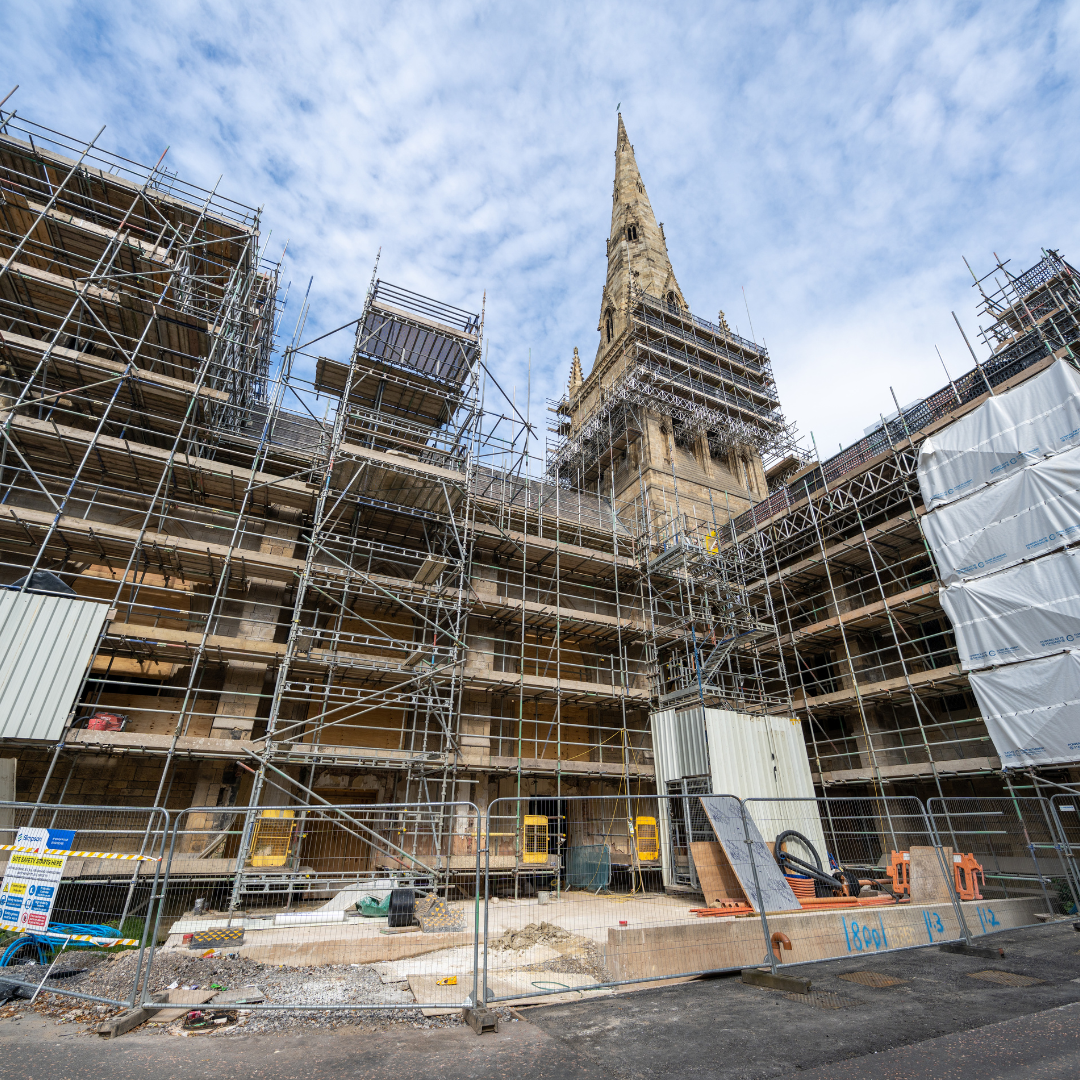
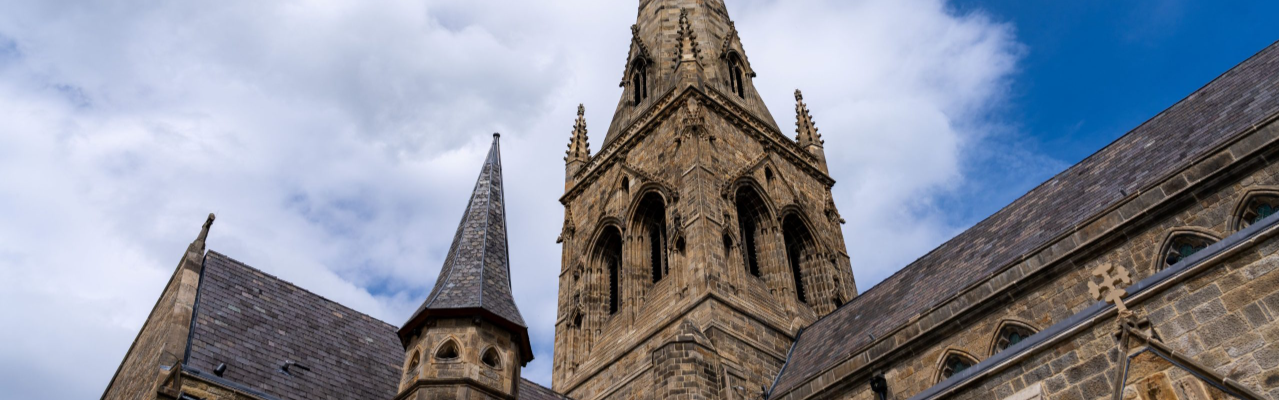
• Major restoration of the spire, including structural repairs and new pinnacles
These works have ensured the Cathedral is once again watertight, structurally sound, and protected for the long term.
The tubes for the scaffolding which covered the building measured 283 miles altogether – if it was laid end to end it would stretch from Salford to Paris!
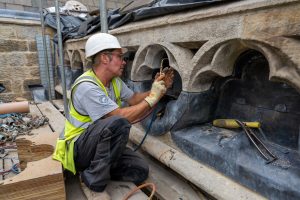
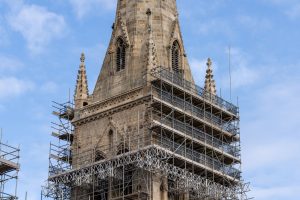
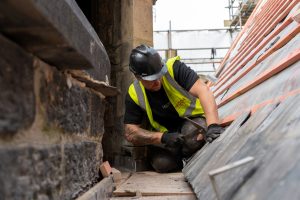
Conservation and Heritage Restoration
Alongside repairs, specialist teams restored the Cathedral’s historic character:
• Cleaning and conservation of internal stonework and surfaces
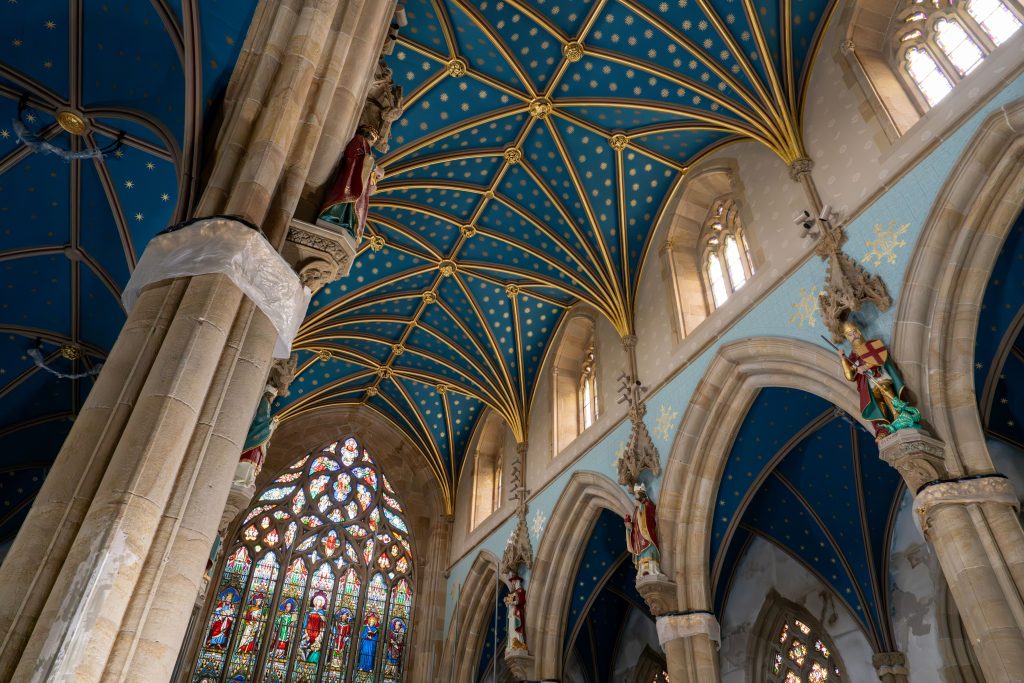
• Replastering and redecoration throughout the interior, inspired by original Victorian schemes
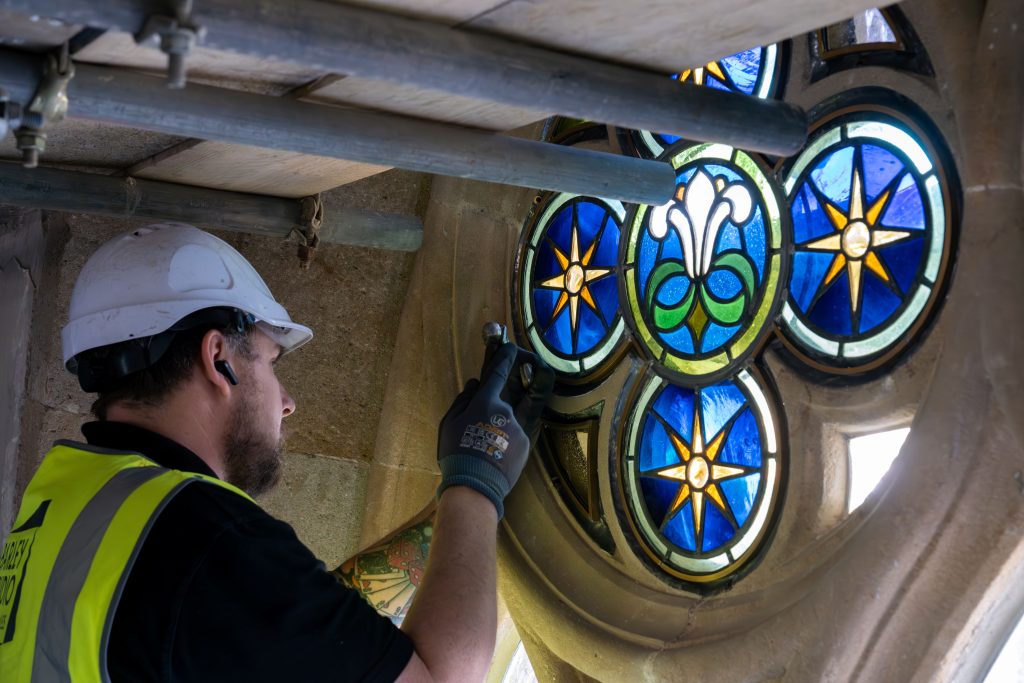
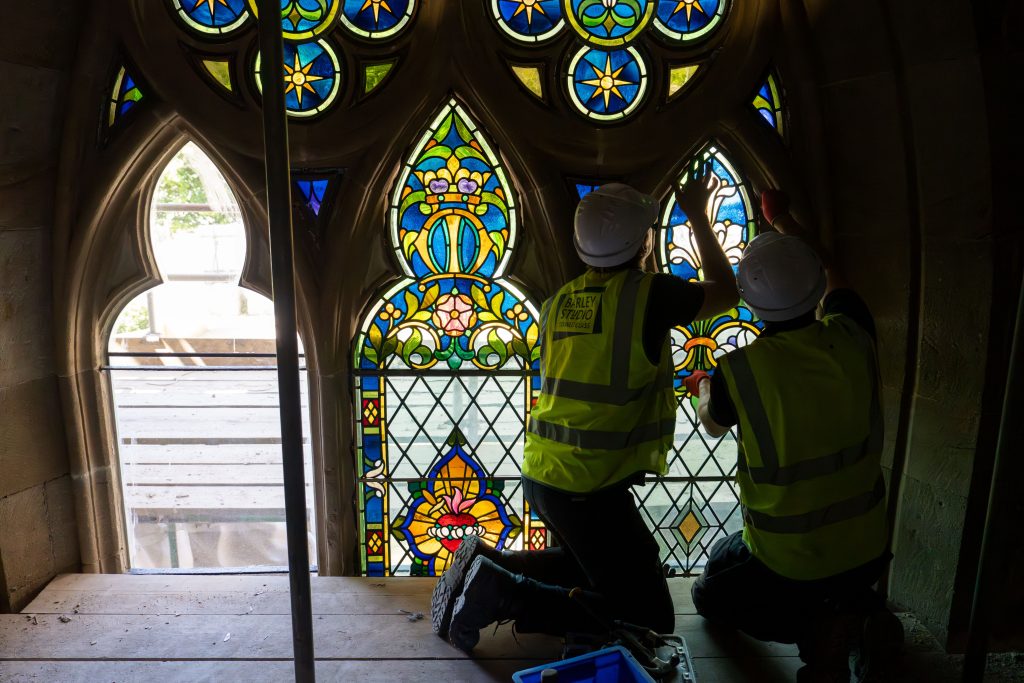
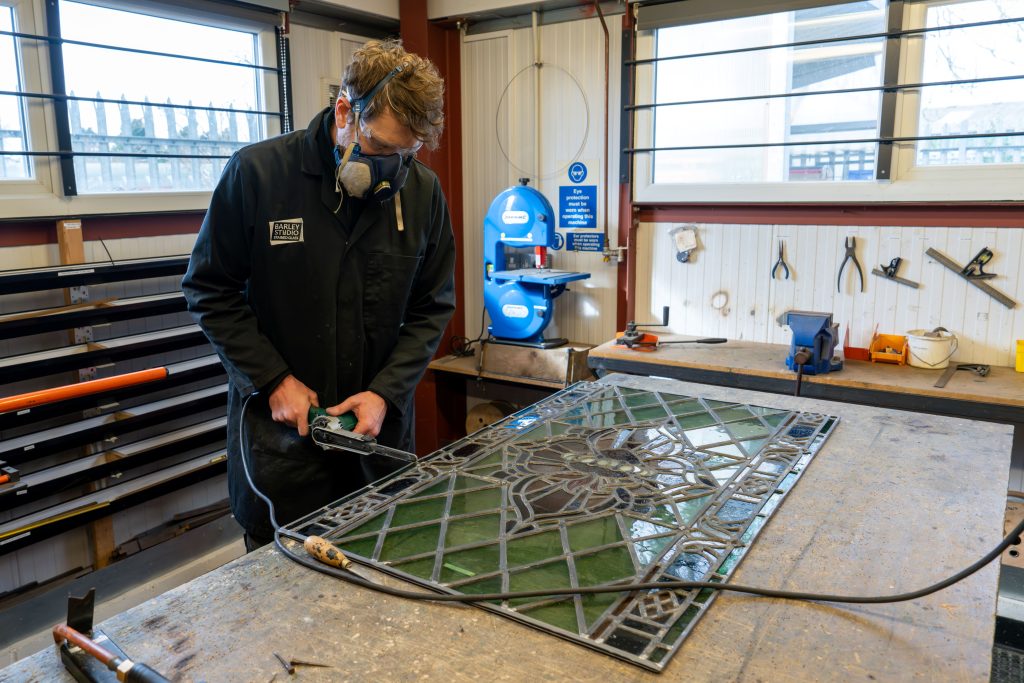
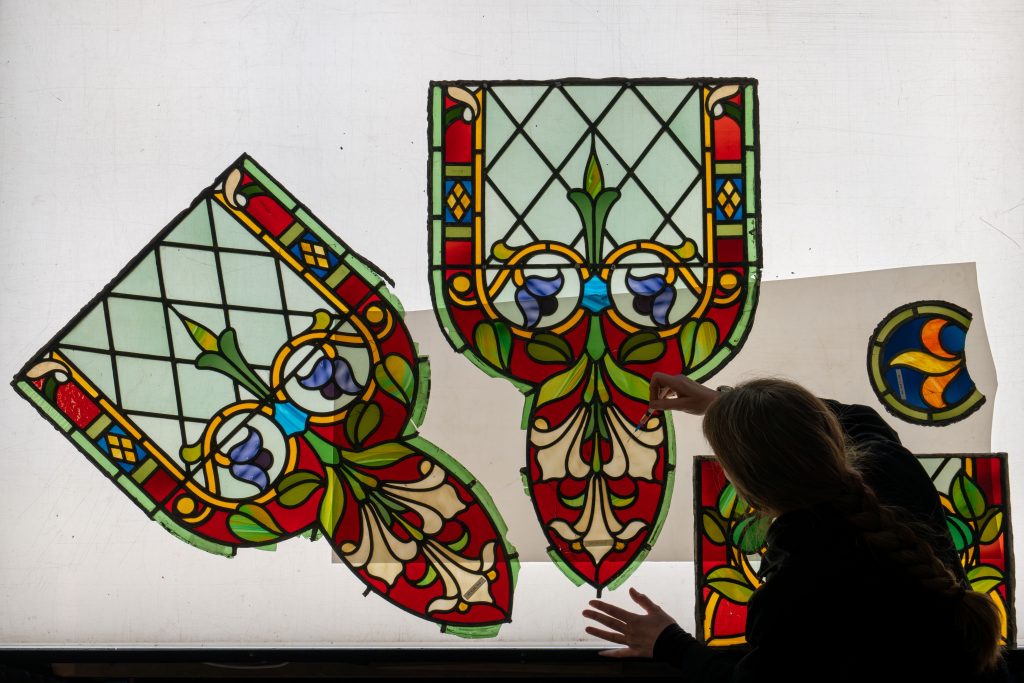
• Restoration of all stained glass windows, with the addition of secondary glazing to protect them
• Careful restoration of statues and decorative elements to their original appearance
This work has brought back much of the Cathedral’s original beauty while respecting its Grade II listed status and Gothic Revival design.
Liturgical Renewal and Reordering
The project also reshaped the Cathedral’s internal layout to better support worship:
• Repositioning of the altar to reflect the original Latin cross design and strengthen the relationship between sanctuary and congregation
• Reinstatement of chapel features, including screens within the Blessed Sacrament Chapel
• Creation of a new Chapel of Initiation, including a font for baptisms
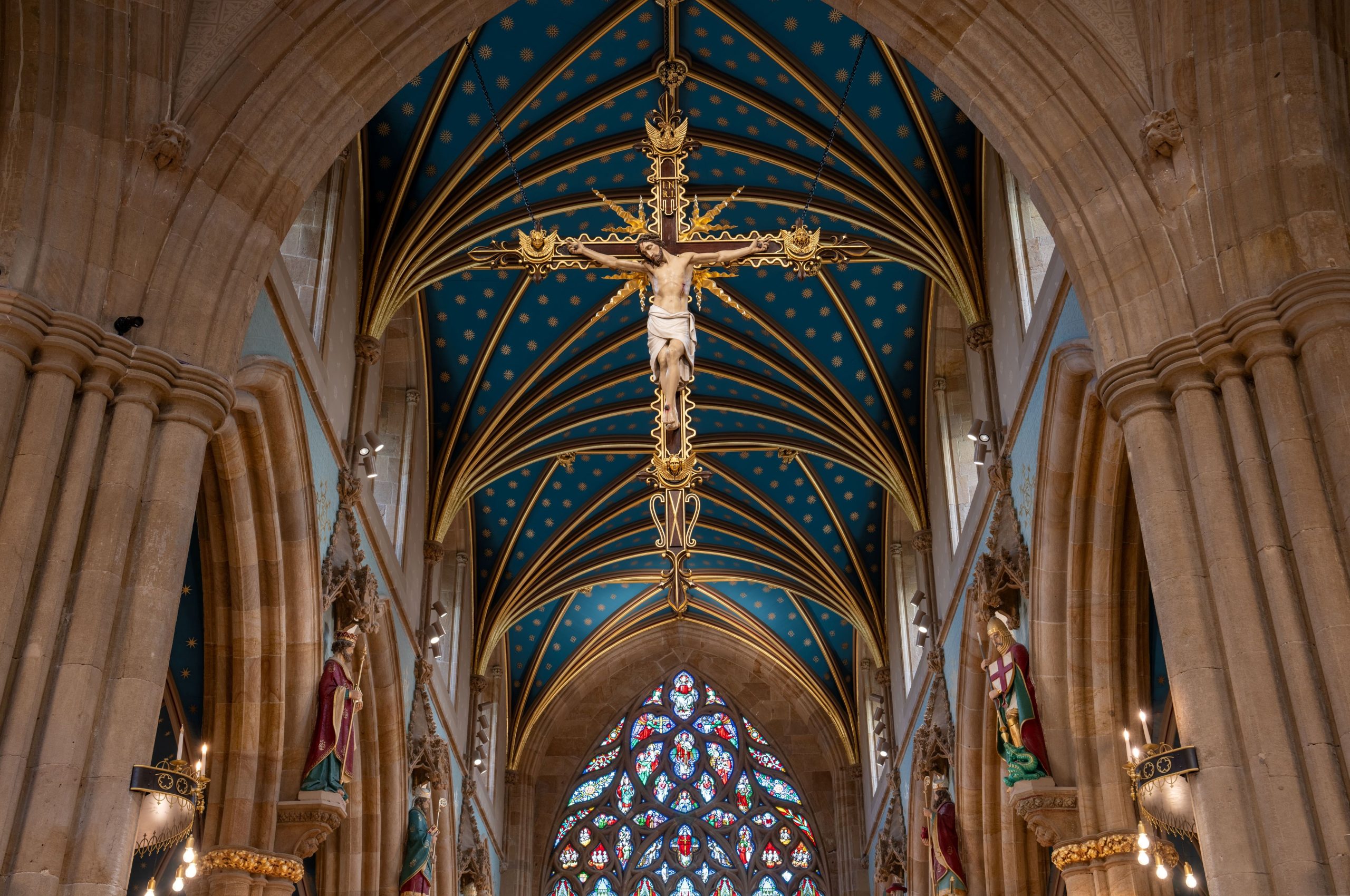
• Reintroduction of significant devotional features, the reinstatement of the rood cross set above the entrance to the chancel
These changes restore the Cathedral’s liturgical coherence and enhance the experience of prayer and worship.
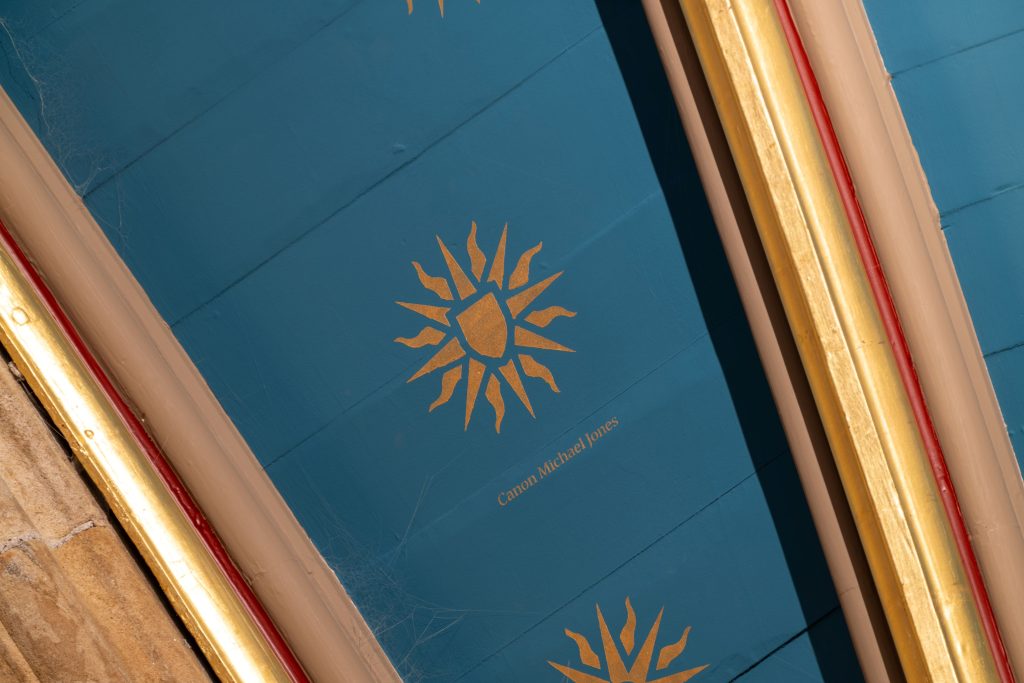
There are over 2,300 stars stencilled individually on to the ceiling and they include 2 special ones stencilled by Canon Michael and Bishop John – can you spot them?

New Facilities and Visitor Spaces
To better serve the community and visitors, several new spaces have been created:
• A new glass entrance opening onto Chapel Street, offering a place of pause and reflection in the city
• Improved seating layout and increased capacity to support large diocesan gatherings
• New visitor facilities, including a bookshop and exhibition space
• Creation of a dedicated treasury to house the Cathedral’s historic relic collection
Sustainability Improvements
The restoration has significantly improved the Cathedral’s environmental performance:
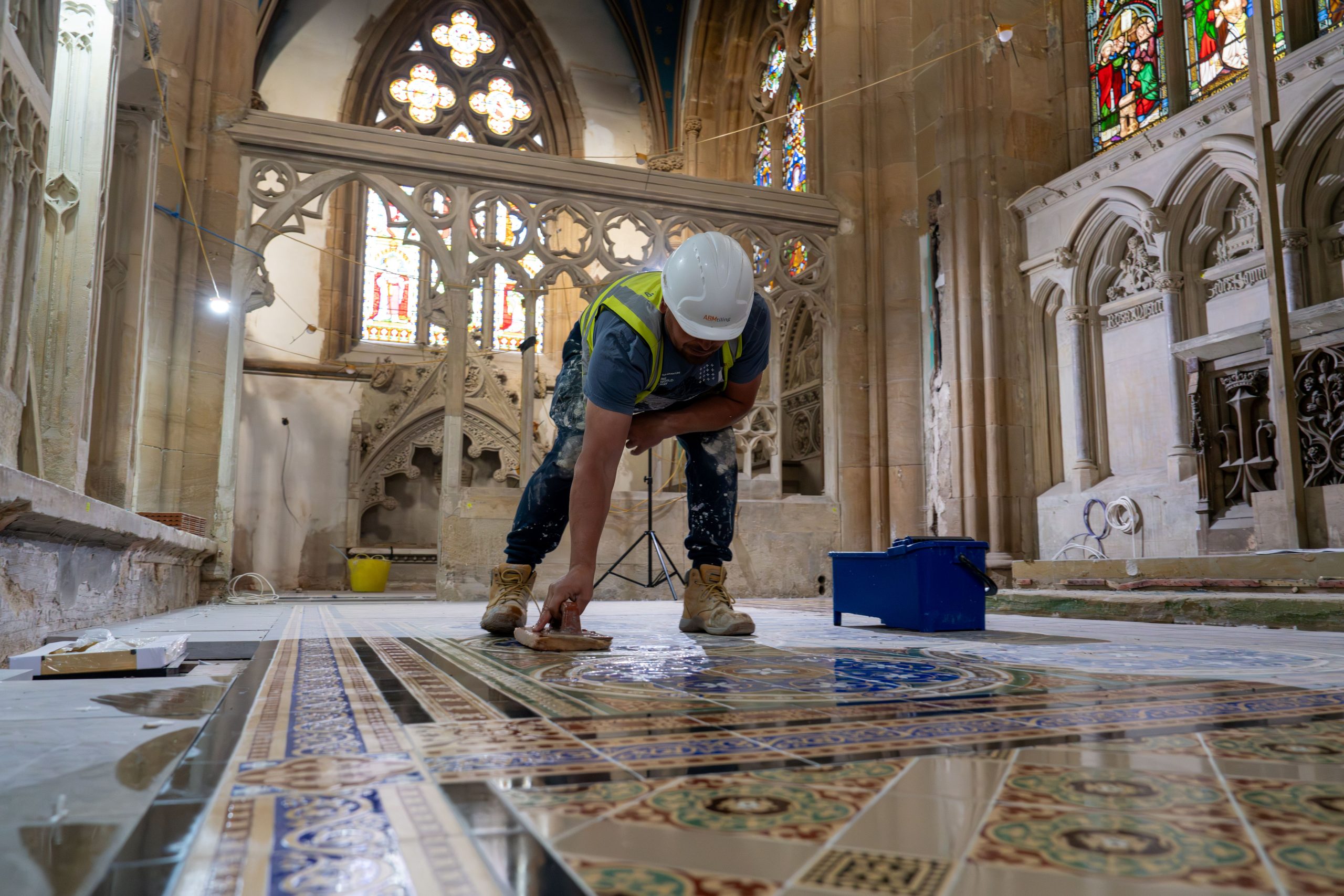
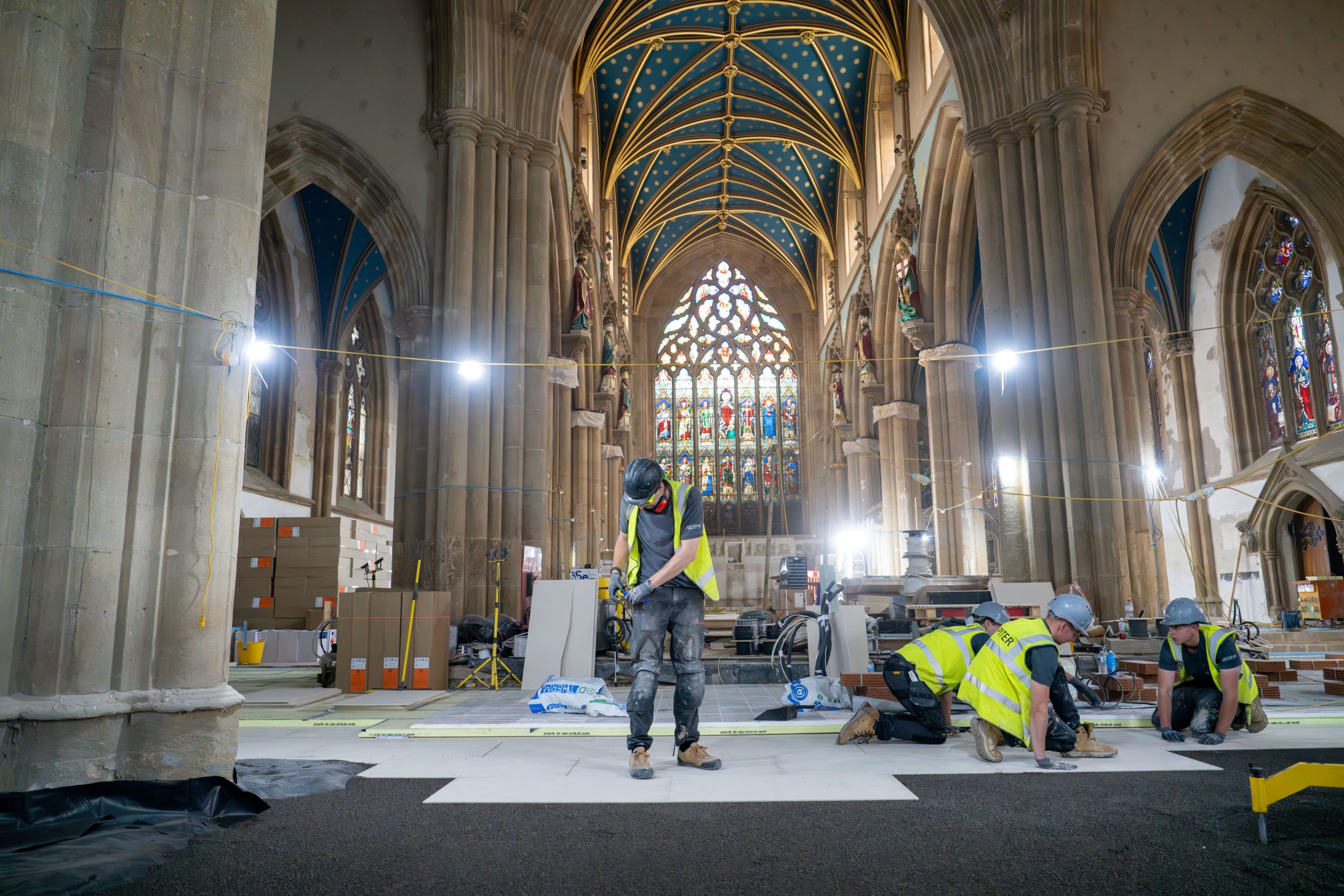
• Insulated floor slab and installation of underfloor heating linked to a ground source heat pump
• Secondary glazing to improve energy efficiency while protecting historic glass
Further sustainability work will continue as part of a long-term commitment to caring for the building and creation.
The Treasury and the Salford Collection
A newly created treasury that will open in Autumn 2026 will house part of the Cathedral’s historic relic collection. We believe to be one of the largest in the UK. Donated in the 19th century, these relics form an important part of the Cathedral’s spiritual and historic heritage.
Displayed on a rotating basis, they offer visitors opportunities for reflection, pilgrimage, and prayer.
More to come on this as we move into the autumn!
A Shared Achievement
This restoration has been one of the Diocese’s largest undertakings, made possible through the commitment of diocese, the expertise of specialist partners, and the patience and faith of the Cathedral community.
A New Chapter Begins
With the Cathedral now reopened, it once again takes its place as the Mother Church of the Diocese renewed in purpose, restored in beauty, and ready to serve.
This is not simply the completion of a building project. It marks the beginning of a new chapter in the life of Salford Cathedral: a place of worship, encounter, and mission for generations to come.
For more details on our journey look at our phases videos and our YouTube playlist here.
On September 12th 2022, work officially began on Phase 1 to restore the cathedral’s exterior. The first phase of the restoration focused on the exterior of the cathedral, which involved a complete re-roof, the re-pointing of the stonework and other masonry repairs, as well as remedial works to the tower and spire.
We also saw the removal and conservation of the stain glass and the installation of secondary glazing. This glazing will not impact the look of the windows but will protect the glass. It will also further insulate the cathedral.
At the end of Phase 1 we installed new external lighting. Placing the Cathedral back on the night time skyline once again.
We have captured some of the work via a time lapse camera so you can witness the progress as we go along.
In Phase one we:
-
- Restored the roof including significant repair to stonework and new flashings, ridge tiles and gutters installed.
- Completed repairs to the spire including the installation of new pinnacles.
- Removed all the stain glass for conservation work
- Reinstalled nearly all the windows alongside the secondary glazing.
- Cleaned all the external stonework.
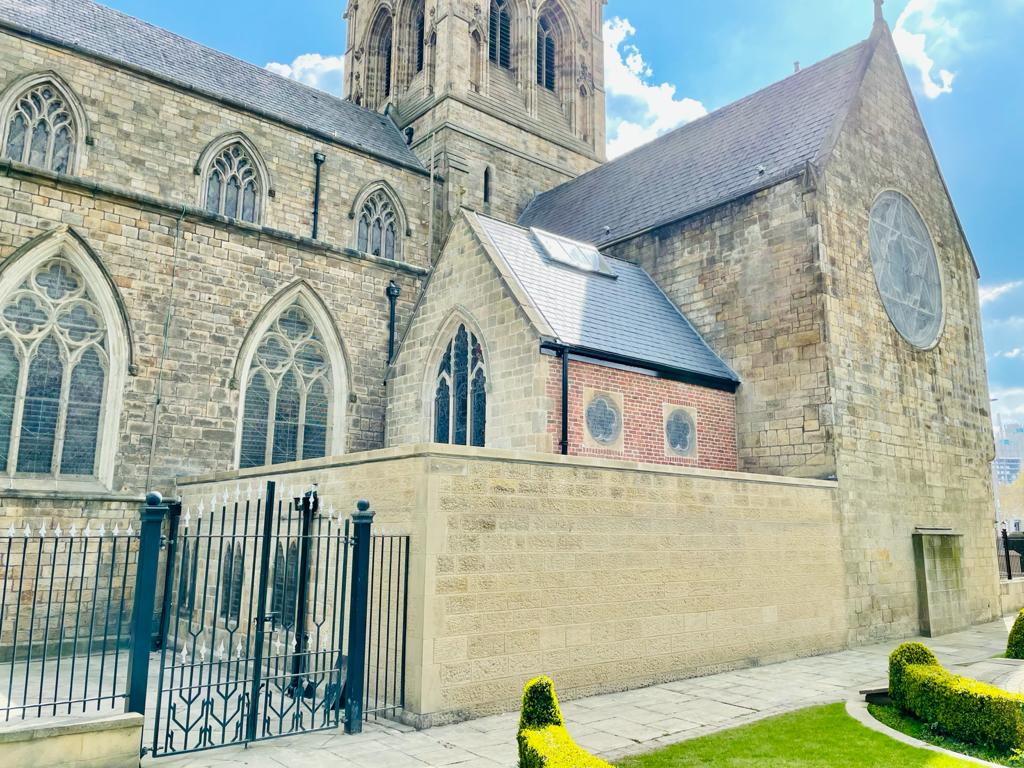
- Demolished the old confessional box extension and begun to build its new replacement.
Phase 2 started in July 2023 and concentrated on the interior of the building. It also saw the opening of the temporary Cathedral, located on Great George Street, M3 6EH. This enabled all parish services to remain on site.
Salford Cathedral has been altered significantly over its lifetime, with much of the original layout and decoration having been removed in the latter half of the 20th Century. Phase Two saw our efforts to restore the original internal character of the cathedral, reordering and relighting it, using sustainable technologies including new insulation, and double-glazing each stained-glass window.
During this stage we:
- Reordered the cathedral, including relocating the altar closer to its original position under the Tower Crossing.
- Added additional seating for our increasing congregation.
- Redecorated the cathedral to restore its original design features that have been lost over the years.
Works Carried Out Since 2016
The restored WWI Memorial Chapel
The Cathedral is a Grade II* Listed Building and its restoration masterplan incorporates the limitations this can result in. The plan also evidences the way in which we have grown to understand historical buildings in a different way over the last few decades. Those involved in the Cathedral Restoration Project are learning to work with the building to enhance the fabric and reintroduce some of the lost aspects of the cathedral, restoring its former glory.
Working with architects Arrol and Snell, the decision of what needed to be completed first came after a quinquennial survey of the building. The first stage of the project was been made possible by a two grants from the First World War Centenary Cathedral Repairs Fund, allowing for a full restoration of our very special WWI Memorial Chapel in 2016. A later award of £373,000 allowed crucial roof repairs to take place and a further £180,000 allowed us to create an alternative entrance (the north door) and piazza, improving accessibility.
As a result of these awards 2018 saw the reroofing of North Isle of the Cathedral, significant repair to stonework and new flashings, ridge tiles and gutters installed. Crucial to this first phase of work was incorporating access to the roof so that it is easier to maintain the fabric of the structure in the future.